
Presented in partnership with

When teacher evaluation consumes leadership time, who's left to lead?
Most districts can tell you how many evaluations their principals are required to complete. Very few can tell you how many hours those evaluations actually consume — or what gets displaced in the process.
The answer, when you look at the data, is striking.
I've just assumed Sunday is going to be a work day for six or seven hours.— Former School Principal to Education Week
Those hours came from somewhere. Classroom visits that didn't happen. Coaching conversations that got shortened or skipped. Relationships that didn't get the time they needed.
The shift didn't happen overnight. It accumulated across a decade of expanding evaluation requirements, growing administrative complexity, and shrinking leadership capacity.
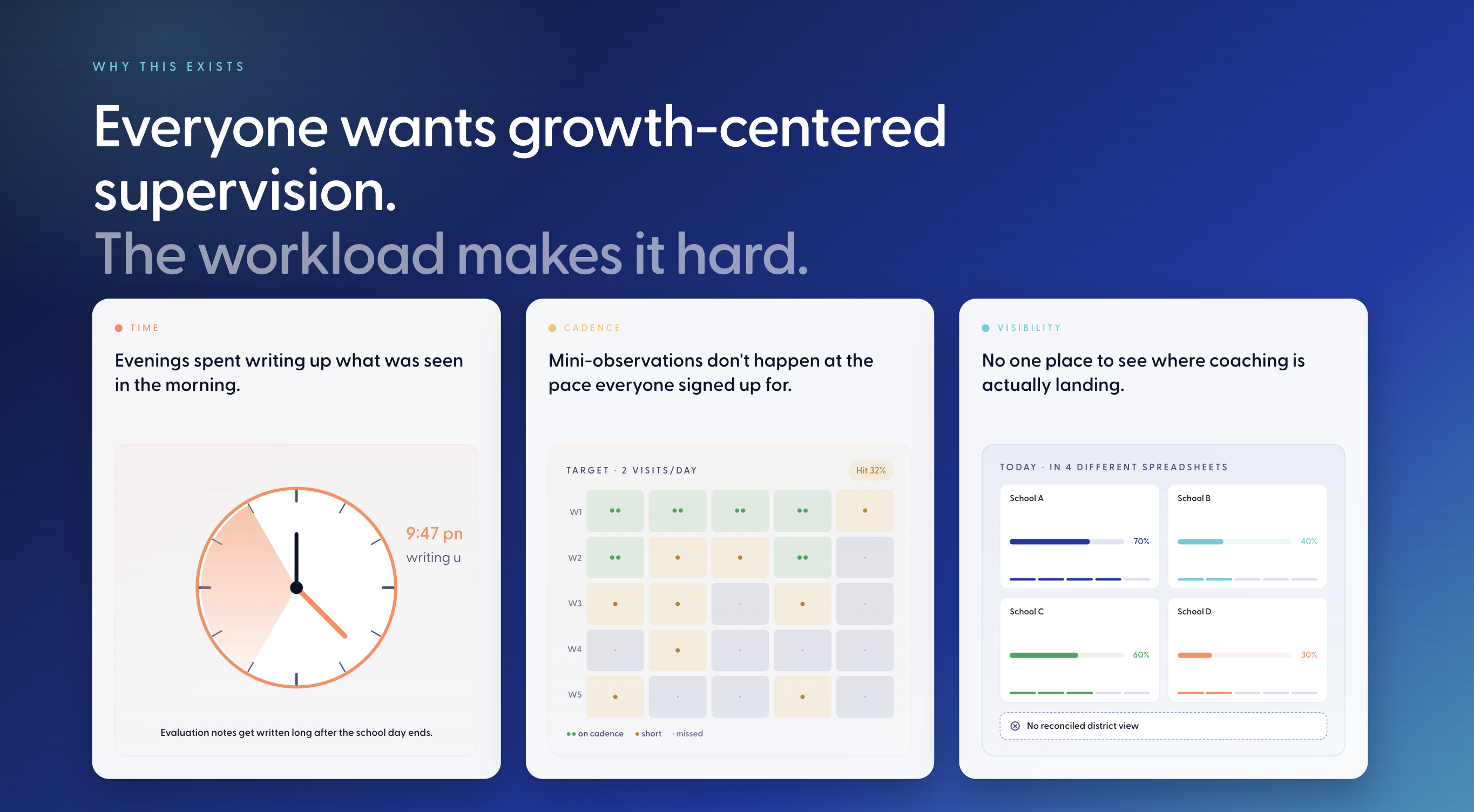
Most principals don't lack commitment to instructional leadership. They lack the time and systems to practice it consistently. The friction shows up in three predictable places.
When evaluations are cumbersome, they get bunched. Districts push documentation to semester-end or year-end because that's the only time principals have enough runway to complete them. By the time a teacher receives written feedback, the lesson being evaluated may be months old.
Feedback that arrives late isn't coaching. It's a record. And a record rarely changes practice.
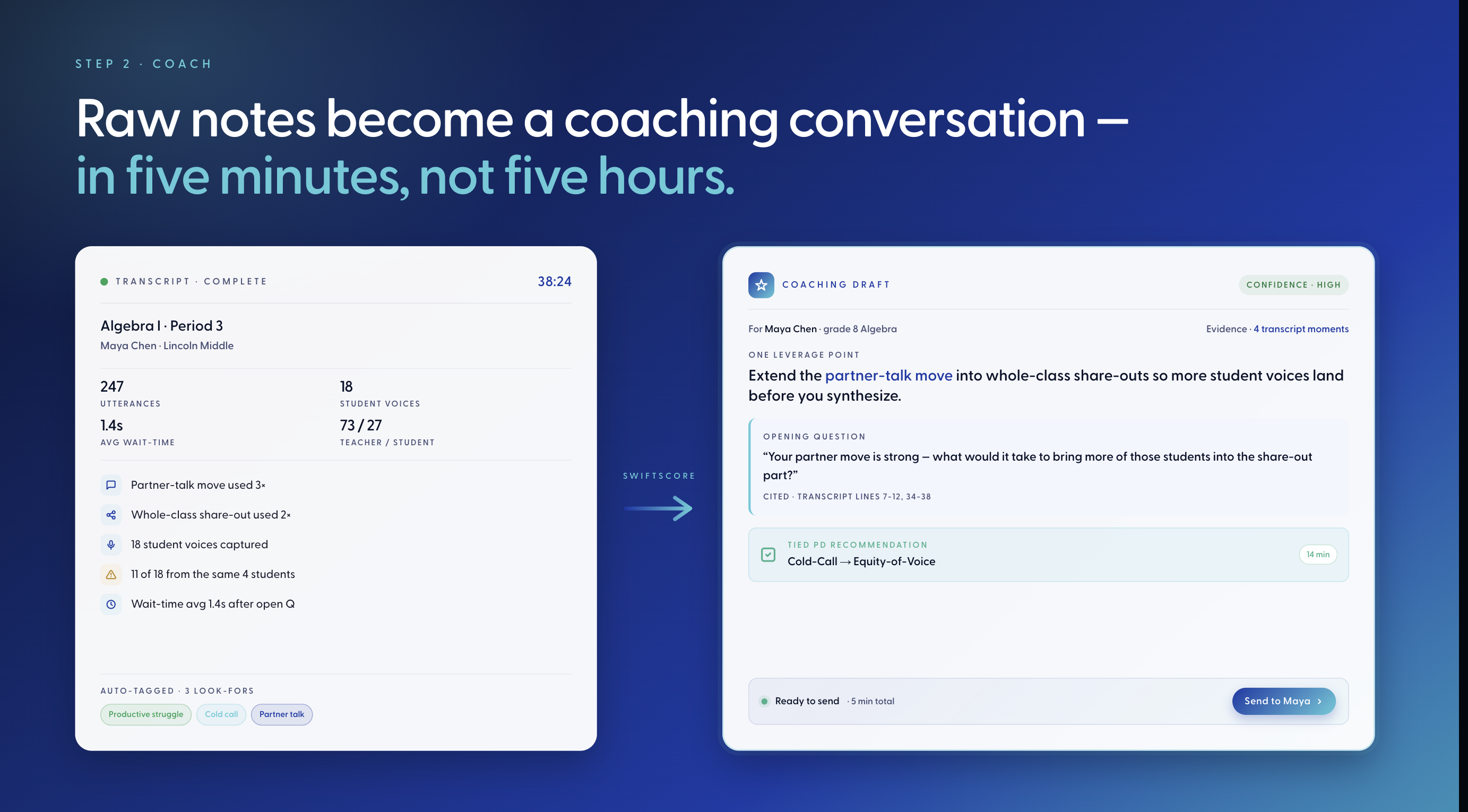
What actually changes practice is a principal who can finish an evaluation before leaving the classroom — and hand a teacher something meaningful while the lesson is still alive in the room. That's not just a time story. It's a trust story.
Consistent, specific, timely feedback is what builds the relationship between evaluators and teachers. And that relationship — more than any rubric, any software, any professional development program — is what determines whether a teacher acts on feedback at all.
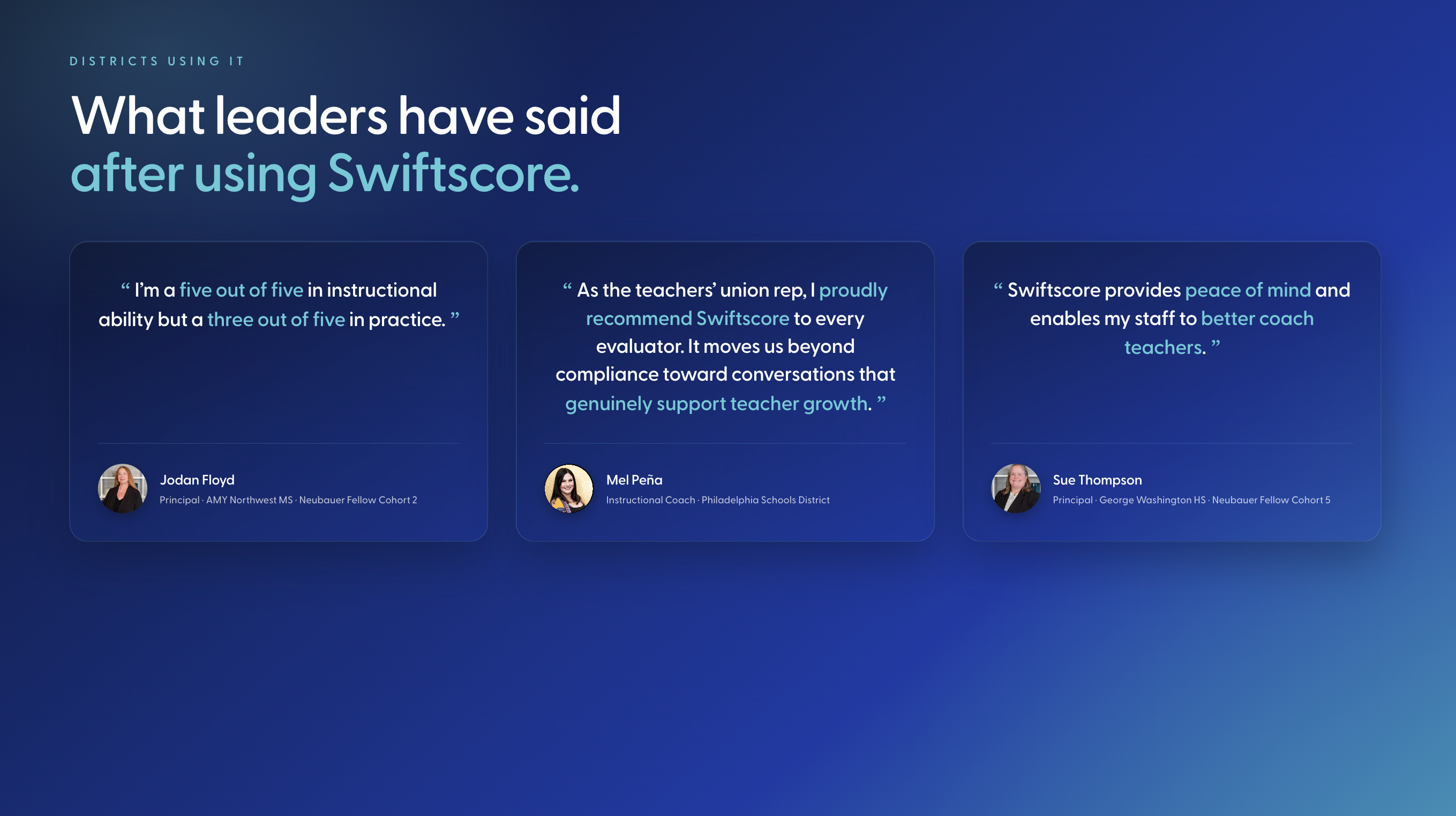
I'm a five out of five in instructional ability but a three out of five in practice.

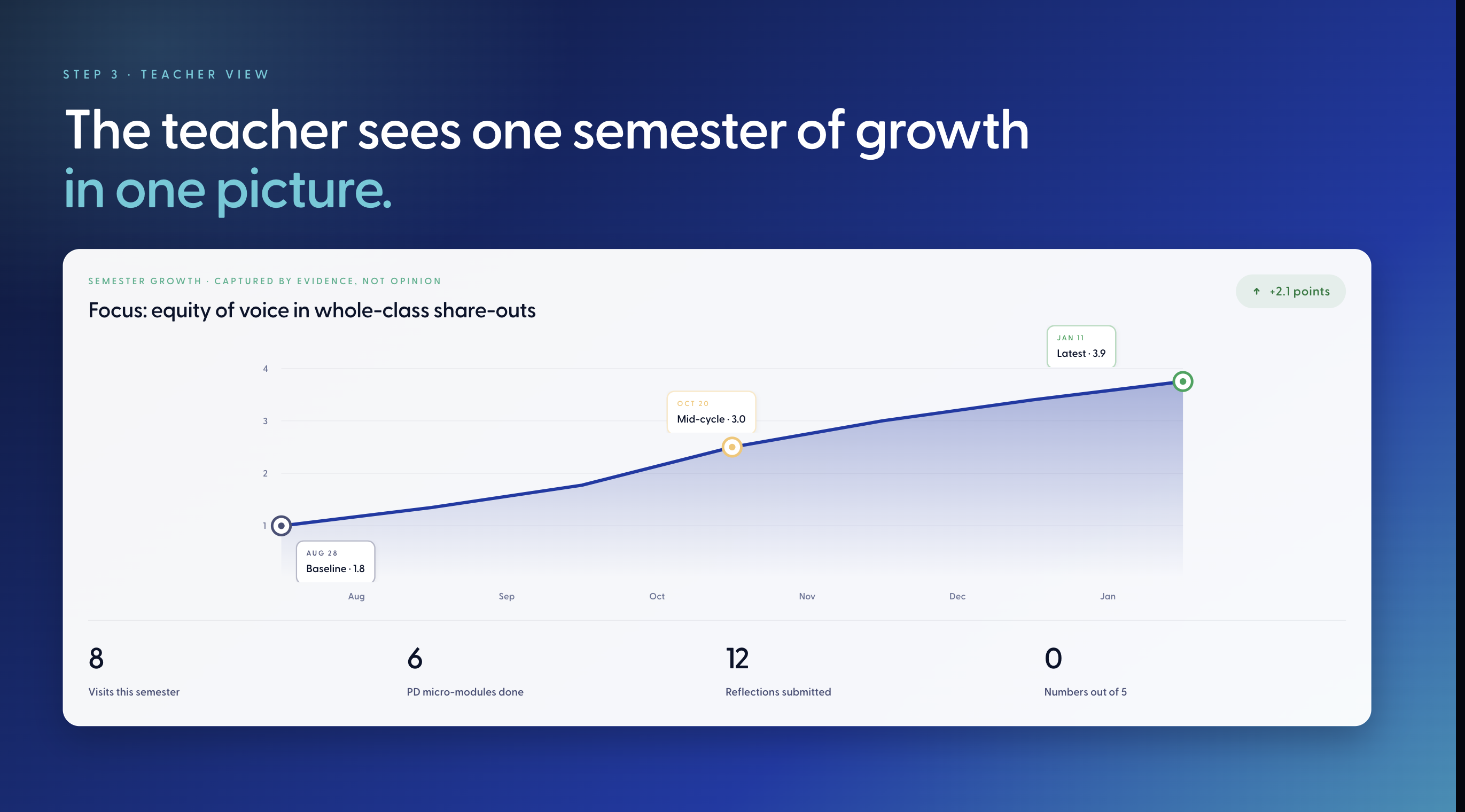
That gap — between knowing and doing, between ability and practice — is where teacher growth actually lives. It doesn't close with annual reviews. It closes with frequent, evidence-based conversations that make a teacher feel seen, supported, and clear on what to try next.
The evaluation system is either building that relationship or quietly undermining it. Most current systems, designed for compliance rather than development, are doing the latter.
The question isn't whether evaluation matters. It does. The question is whether the current system is structured to produce the outcomes districts actually want — or whether it's producing documentation at the expense of development.
Districts that are rethinking this aren't abandoning accountability. They're asking different questions.
As the teachers' union rep, I proudly recommend Swiftscore to every evaluator. It moves us beyond compliance toward conversations that genuinely support teacher growth.

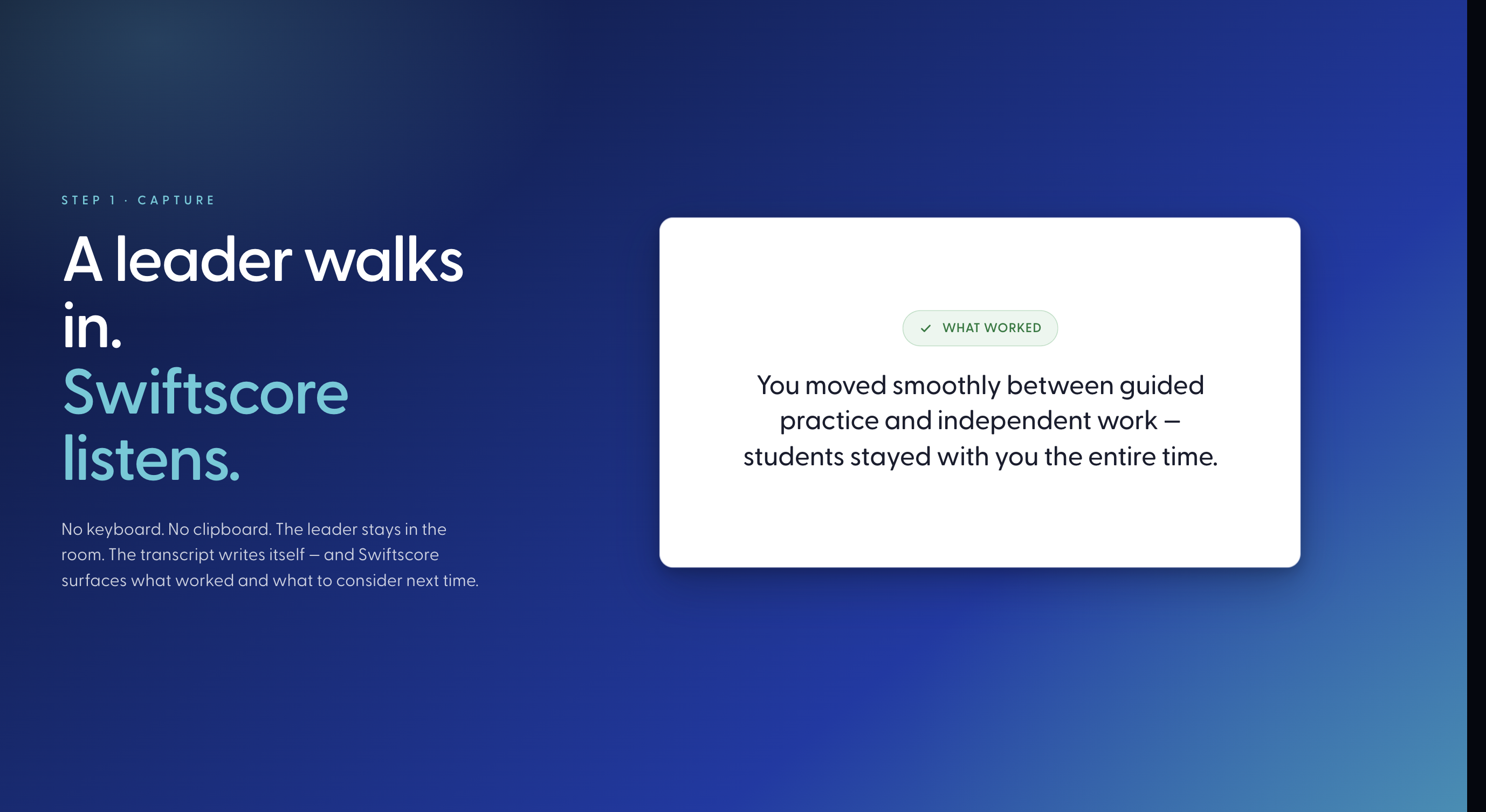
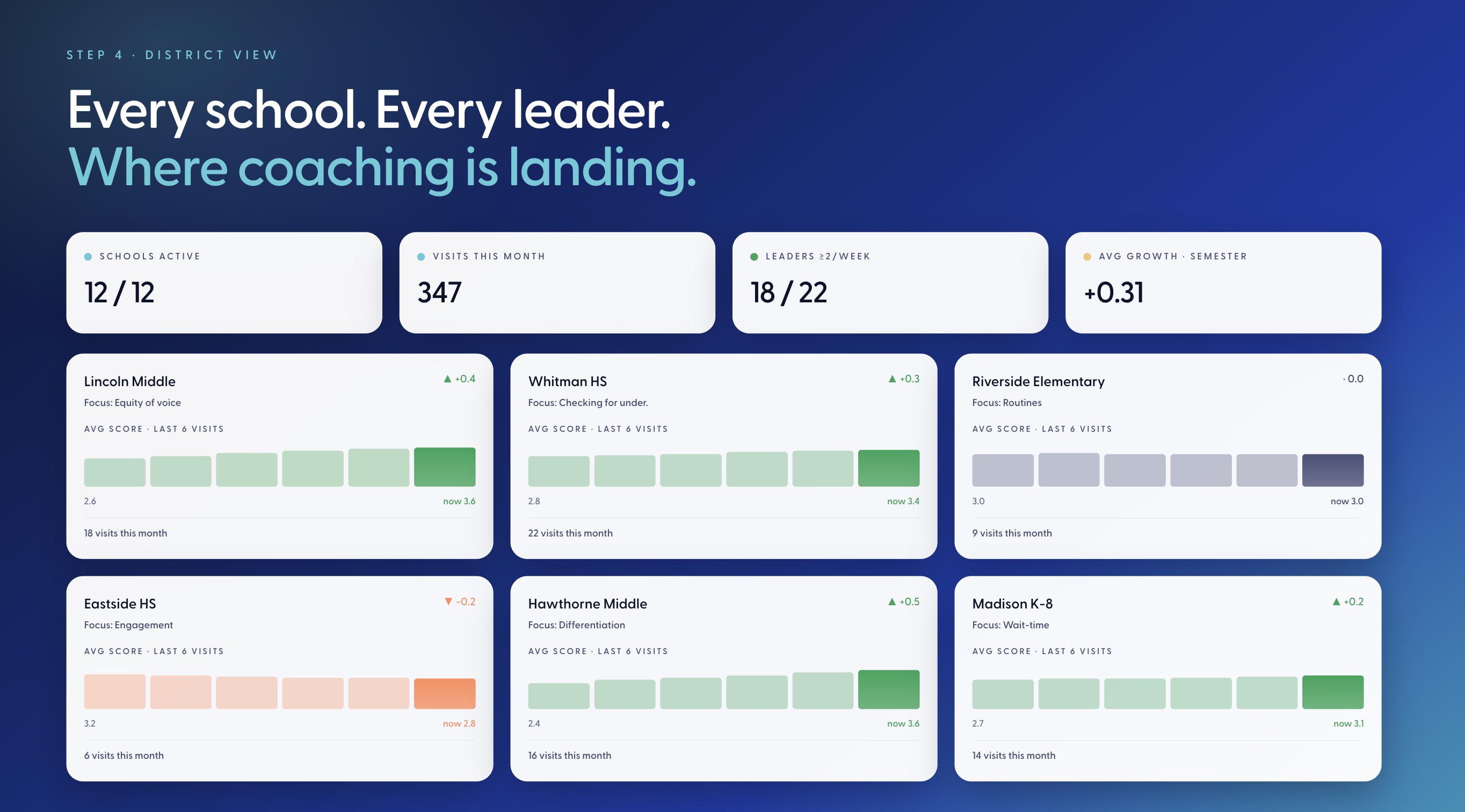
Swiftscore built a short walk-through for district leadership that shows exactly how this works in practice: from the moment a principal walks into a classroom, to the coaching conversation that follows, to the district-level view of where growth is landing. Three minutes.

A 20-minute walkthrough tailored to your evaluation framework, your goals, your size. Or email nick@swiftscore.org and the team will send back times.